
 Profile
 Dashboard
 Logout
Table of contents
Key takeaways
- A video can introduce the team, but a face alone cannot prove that a business is legitimate. Pair it with verifiable company and contact information.
- Visitors decide whether to trust an unknown site in about 50 milliseconds based on visual cues that signal there’s a real business behind the page.
- You can get a video greeting live in under 5 minutes with a twenty second clip recorded on a phone, one upload, and a single line of embed code.
What the data says about deepfakes and website trust
A genuine team recording can help visitors understand who they are dealing with. It is not proof of legitimacy, and the available examples do not establish a conversion uplift from using it.
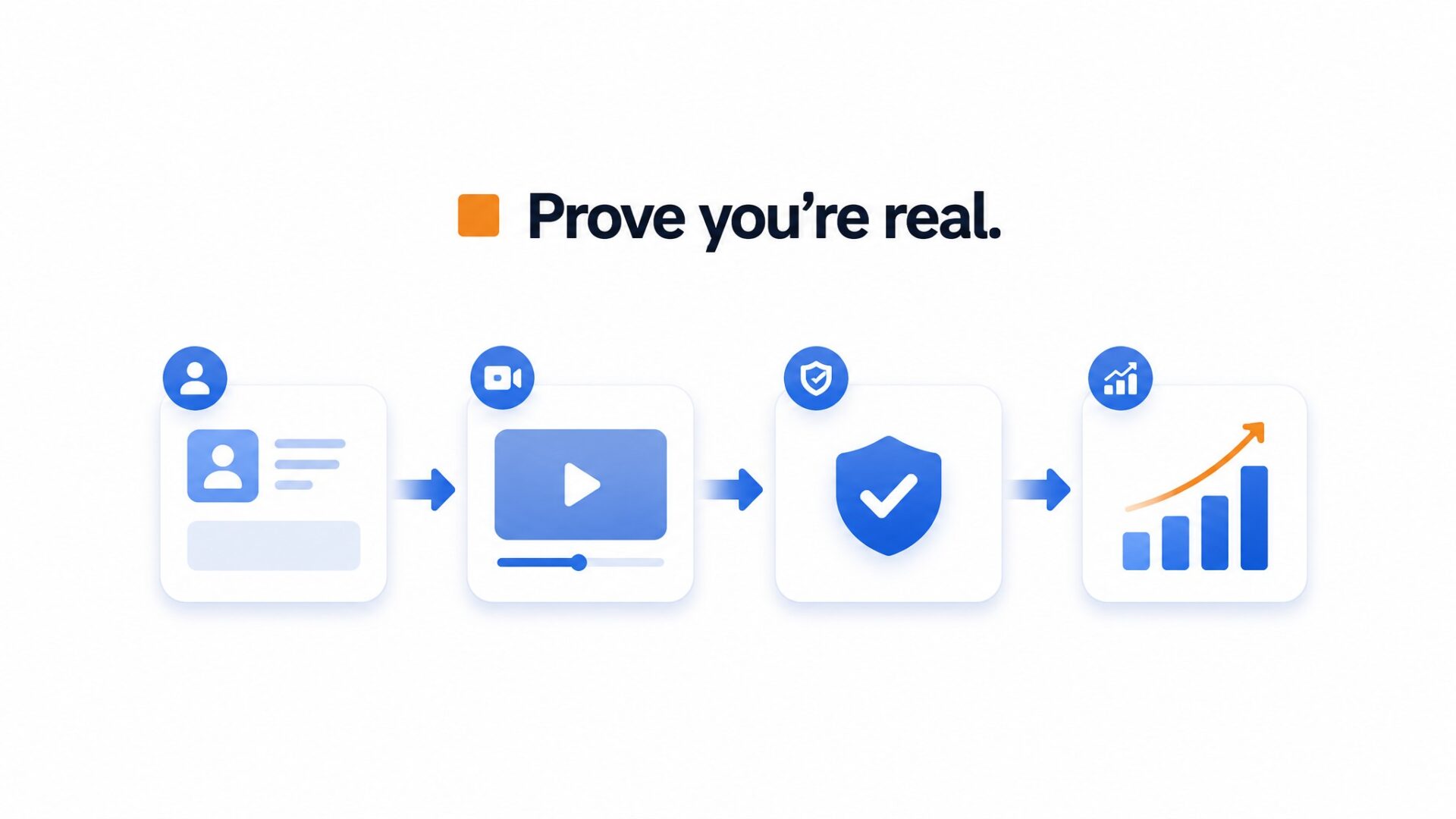
Jumio’s 2025 global study found that 74% of consumers worry day to day about video and voice deepfakes, and 69% are more skeptical of online content because of AI powered fraud. Surfshark also reported a sharp rise in deepfake incidents in 2024, with early 2025 cases already outpacing the previous full year. Most people still struggle to spot them. One study found human detection rates for high quality synthetic video sitting at just 24.5%.
Trust in online identity verification is under pressure.
By 2026, 30% of enterprises are projected to stop considering identity verification solutions reliable in isolation, according to Gartner. That skepticism spreads to consumers. When a visitor lands on a site they have never seen before, the default assumption is no longer that a real business sits behind it. Local clinics now compete with AI fakes. Solo ecommerce operators face the same problem. So do service professionals.
What happens when businesses prove they are real

Record an actual team member explaining the service and next step, then connect the greeting with verifiable contact and company details. Measure enquiries separately; the available examples do not establish a performance result for this approach.
Proving you are a real business is no longer a courtesy. It is a measurable growth tactic.
What makes visitors trust a website they have never seen before?
Visitors decide whether to trust an unknown site in about 50 milliseconds based on visual cues that signal there’s a real business behind the page.
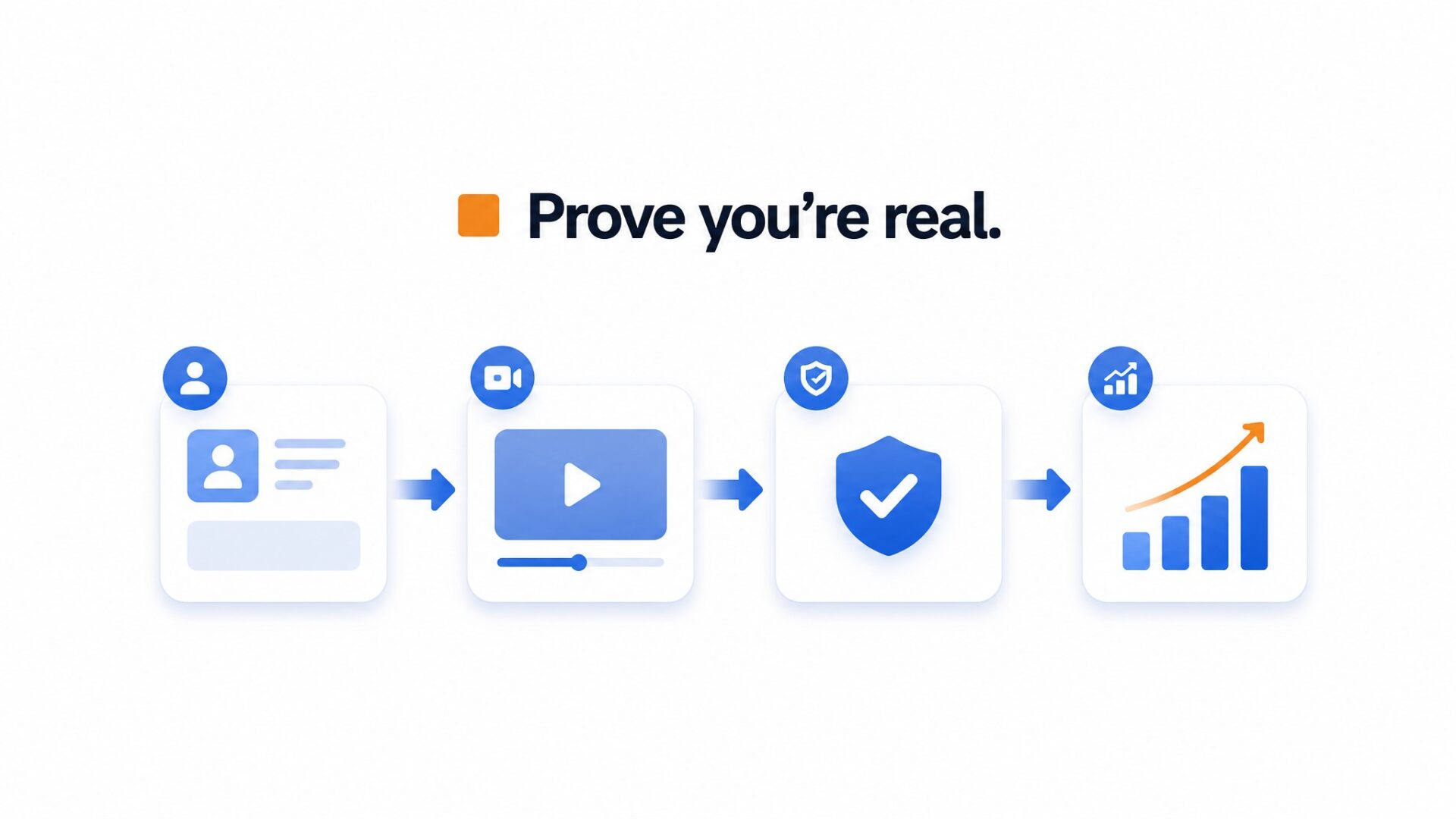
That’s not enough time to read a testimonial.
They’ll scan for faces first, then contact details that point to a physical location, then reviews that mention specific outcomes rather than generic praise. Specifics matter more than stars. A phone number that routes to voicemail is better than none. An address that matches a real storefront on Google Maps beats a post office box every time.
Video builds trust faster than static content
A greeting can combine a face, voice and workplace context. Since these can also be fabricated, visitors should be able to check the business through independent information. The available examples do not substantiate a conversion advantage.
Most teams skip this and regret it.
Stock photos rarely move the needle. Teams buy polished imagery and wonder why bounce rates stay flat. Stock faces register as advertising. A video with uneven lighting, a slight pause, or a dog barking in the background reads as authentic in a way that perfect images can’t. In an era of synthetic media, imperfection is the trust signal.
Placement matters too.
A video greeting near the top of a homepage carries more weight than the same clip buried three scrolls deep. Use a human face in the thumbnail, not a logo. A play button next to a headline usually makes the action clearer than a button floating in a sidebar.
One setup quirk that catches people off guard is that autoplay with sound destroys trust faster than silence. Let visitors choose to press play. The ones who do convert at higher rates.
How to set up your first video greeting in under 5 minutes
You can get a video greeting live in under 5 minutes with a twenty second clip recorded on a phone, one upload, and a single line of embed code. Most teams overthink the production quality and never ship.
Step one is the message. Introduce yourself by name and title, then state exactly who you help and what you do. Keep the whole thing under thirty seconds.
Visitors who see a ninety second monologue close the bubble before the pitch lands. Look at the camera lens, not your own face in the preview window. Eye contact reads as trust on the viewer side even though it’s slightly unnatural to record.
Placement matters more than polish.
The default bottom right corner works for most sites, but on mobile you’ll need to nudge it away from the thumb zone where users scroll. Avoid covering your checkout button or mobile menu.
Start with your homepage and your highest intent page, usually pricing or a service page. Spreading the bubble across every URL on day one just dilutes your data.
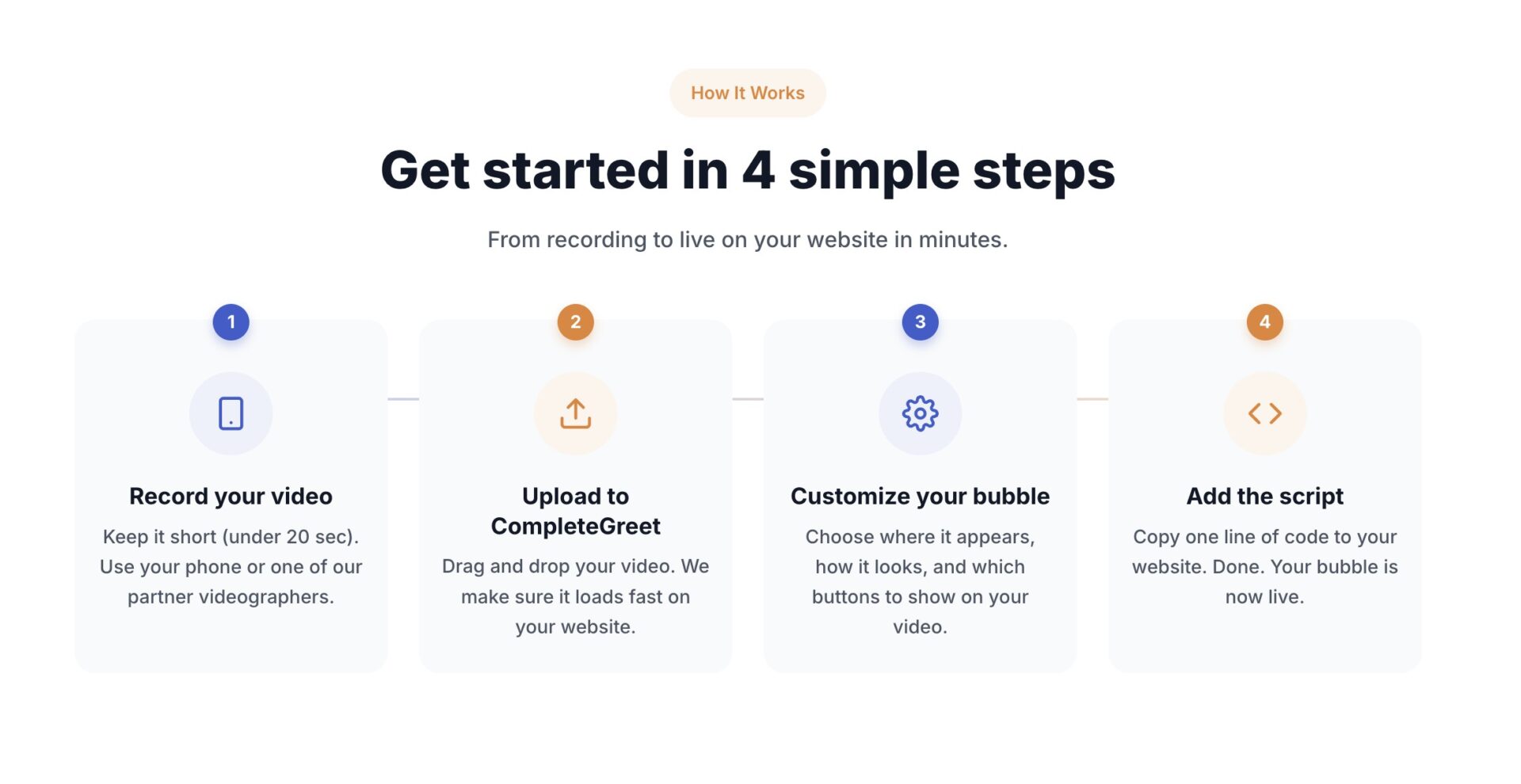
After you paste the script into your site header, run a quick test. Open an incognito window, load your site, and watch the bubble appear.
Click it, let the video play, and submit the contact form. Confirm the lead hits your inbox or CRM before you call it done. Broken forms are more common than broken video, and a greeting that captures zero leads is just decoration.
What to track in the first thirty days
Play rate and completion rate are the two numbers that matter. Play rate tells you if the thumbnail and placement are tempting enough to click.
Completion rate can help identify where viewers leave. Even if many people open the video and few finish, the opening line is only one possible explanation. Review the recording and completed actions before choosing a change.
Track form submissions tied to the widget separately from your general contact form. You want to know if the video is generating qualified leads, not just activity. Across live implementations, businesses that separate widget leads from general inquiries see clearer patterns faster.
CompleteGreet BUILD is $29 per month when billed yearly, or $36 month to month, for 5,000 unique visitors per month, 1 website, and 2 bubbles or videos. That’s enough to test a homepage greeting and a pricing page variant side by side. Compare plans if you need more visitor volume or multiple sites.
Don’t A/B test your script in week one. Get one greeting live, let it collect data for two weeks, then iterate.
Speed beats perfection.
Common questions
How do deepfakes hurt trust for small business websites?
Deepfakes make visitors question whether photos, reviews, and even video testimonials are real. Jumio’s 2025 global study found that 74% of consumers worry day to day about video and voice deepfakes, and 69% are more skeptical of online content because of AI powered fraud. For a small business, that skepticism means a new visitor needs stronger proof that the owner and the company are genuine before they will fill out a form or make a purchase.
What is the fastest way to show visitors a real person runs your website?
A short video greeting of the founder or team member is one of the fastest trust signals you can add. It takes under five minutes to record and publish with a widget like CompleteGreet. Unlike static photos, a greeting with natural movement and audio shows a real human behind the brand in a way a badge or testimonial cannot show on its own.
How much does it cost to add a video greeting to a business website?
CompleteGreet BUILD is $29 per month when billed yearly, or $36 month to month, for 5,000 unique visitors per month, 1 website, and 2 bubbles or videos. That flat rate includes hosting, the player, and basic tracking. There are no overage fees if a video is replayed, because billing is based on unique visitors only.
Do video greetings actually improve conversions?
A personal greeting may help explain who runs the business, but the available examples do not establish a measured conversion lift. Test the response on your site and keep verifiable contact and company details easy to find.
What should a first video greeting say?
Keep it to 20 or 30 seconds. Introduce yourself by name and role, mention the main problem the business solves, and tell the visitor exactly what to do next. Skip the script. A slightly imperfect take feels more authentic than a polished ad, and authenticity is the whole point when deepfakes are making people suspicious.
How long does it take to set up a video greeting on a website?
Most users are live in under 5 minutes. Record on a phone or laptop, upload the file, copy the embed code, and paste it into the site header. CompleteGreet works on Shopify, WordPress, Wix, Squarespace, Webflow, WooCommerce, and custom HTML. No developer is needed for standard installs.
Can deepfake detection tools replace human proof on a website?
No. Detection tools help platforms filter content, but a visitor to your site will not run forensic software before buying. The most practical protection for a small business is to proactively show real, unfiltered human presence. A video greeting does that instantly without asking the visitor to trust a third party label or badge.