 Profile
 Dashboard
 Logout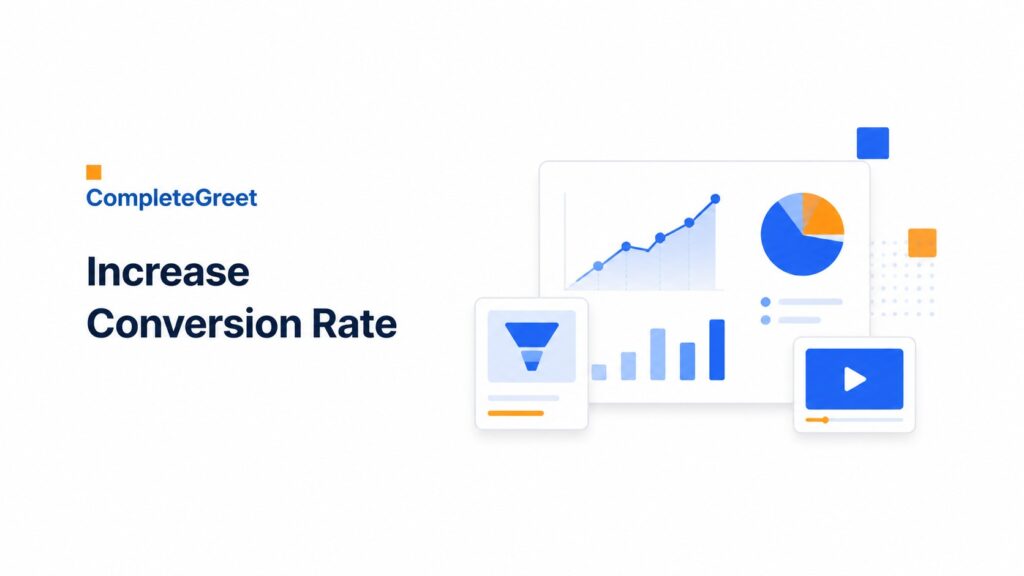
Table of contents
Key takeaways
- Add a personal video greeting to your homepage or landing page.
- A pricing-page greeting can explain the offer and next step. Test whether it helps visitors complete the intended action.
- Start with a 20 to 30 second clip recorded on your phone, upload it to your widget dashboard, and paste the embed code into your site header before you overthink the production quality.
How to Increase Your Website Conversion Rate
Test a personal greeting on a page where visitors need an explanation before acting. Choose a conversion goal and record the baseline before publishing.
Count completed enquiries, bookings or purchases separately from video plays and time on site. The available examples do not establish a typical uplift.
A face in the corner breaks the anonymity of a standard webpage. Visitors who see a real person greeting them are more likely to trust the business and take action.
This works because most websites feel impersonal. A video bubble signals that actual humans run the operation, which reduces hesitation on pricing pages and contact forms.
The setup takes under five minutes on most platforms.
But the real work is the 30 second clip itself. Record in natural light, speak directly to your visitor’s problem, and end with a clear next step like “Book a call” or “Browse our packages.” Skip the scripted corporate tone. Authenticity converts better than production value.
Which pages see the biggest conversion lift from video?
Pricing pages are a useful place to test explanations of cost, commitment and what is included. The available customer examples do not establish that this placement has the highest lift.
Contact and booking pages perform almost as well.
On a booking page, explain the next steps and what visitors can expect. Keep the booking form easy to use and measure completed appointments.
Entry pages and service explanations
Match the message to the page and audience. Measure qualified enquiries or purchases; a shorter visit or a video view does not by itself establish a better result.
Service pages benefit when the offering is complex or high, ticket. A 90 second explanation of how your process works beats a wall of text that most visitors will not read. Place the bubble in the bottom right corner so it does not block your main call to action.
Product pages see more modest gains unless the item requires demonstration. A simple physical product with clear photos does not need a video greeting, but a software tool or custom service does.
Skip checkout pages entirely. The widget distracts at the payment step.
How to set up your first video greeting in under 5 minutes
Start with a 20 to 30 second clip recorded on your phone, upload it to your widget dashboard, and paste the embed code into your site header before you overthink the production quality.
What to say in your first take
Most first, timers spend 45 minutes scripting a perfect monologue that never gets recorded. The videos that actually convert sound like a quick hallway conversation, not a TV commercial. State your name, mention one specific pain point you solve, and tell visitors what to do next. That is it.
Script template that works: “Hi, I am [name]. Most people who land here are trying to solve [specific problem]. If that is you, hit the button below and I will personally [specific outcome] within 24 hours.” Record three takes and pick the one where you blink normally. Over, rehearsed eye contact looks robotic.
Where to place the bubble
Placement matters more than polish.
Choose a pricing, product or booking page where the video can answer a real question. Keep the widget clear of forms, navigation and primary buttons on mobile and desktop. Review customer website examples for implementation ideas.
How to measure if it is working
Record your current conversion rate before publishing. Track widget interactions and completed forms or bookings, using eligible visitors as the denominator. Decide the test length from traffic and the change you want to detect; low engagement or flat conversions alone cannot identify the cause.
Most teams skip the mobile preview and regret it. The video player should never auto, play with sound, and the close button must stay visible even when the visitor scrolls. Test this on an actual phone, not just Chrome DevTools. A thumb, friendly widget beats a high, resolution one that covers the checkout button.
Conversion rate optimization relies on understanding exactly where visitors drop off and what prompts them to act.
Small changes can affect audiences differently. Use a comparable control to distinguish the effect of the change from differences in traffic or timing.
The basic conversion rate formula remains straightforward: divide total conversions by total visitors, then multiply by 100 to reach a percentage. A site with 50 conversions from 2,000 visitors holds a 2.5% conversion rate.
Page speed directly impacts this calculation. Sites that meet Google Web Vitals guidance thresholds for loading performance retain visitors longer and convert at higher rates than slower alternatives.
Trust signals and clear value propositions work together to reduce hesitation. Video elements address both by providing human context and immediate answers to common questions without requiring navigation.
Use a comparable control or baseline to assess the video’s contribution. The available customer examples do not establish that video increases both engagement and conversion.
Teams seeing the strongest results typically deploy video on high, intent pages within the first 48 hours of setup. CompleteGreet handles the technical implementation, allowing focus to remain on script content and placement strategy.
Common questions
What is a good website conversion rate for a small business?
A useful benchmark must match the action, audience and traffic source. In a hypothetical example, moving from 1% to 2% enquiry conversion doubles enquiries at unchanged traffic; it does not automatically double revenue. Track lead quality and completed sales separately.
How much can video widgets increase conversion rates?
There is no verified typical uplift in the examples reviewed here. Test a page, message and action together, then report completed conversions and visitor counts rather than assuming video outperforms static content.
Do video widgets slow down my website?
Well, built widgets load asynchronously and do not hurt page speed scores. The video loads only after the page renders, so Core Web Vitals stay clean. Avoid widgets that autoplay heavy files or block rendering. A 5 to 10 second greeting compressed to under 2MB loads fast even on mobile connections.
How long should a website video greeting be?
Keep it under 30 seconds. Fifteen seconds is the sweet spot for landing pages. Visitors decide whether to stay within 3 seconds, so front, load your value. Say who you are, what you solve, and what to do next. Cut any sentence that does not move the visitor toward action.
How do I add a video widget to my Shopify store?
Copy the widget code and paste it into your theme.liquid file above the closing