 Profile
 Dashboard
 Logout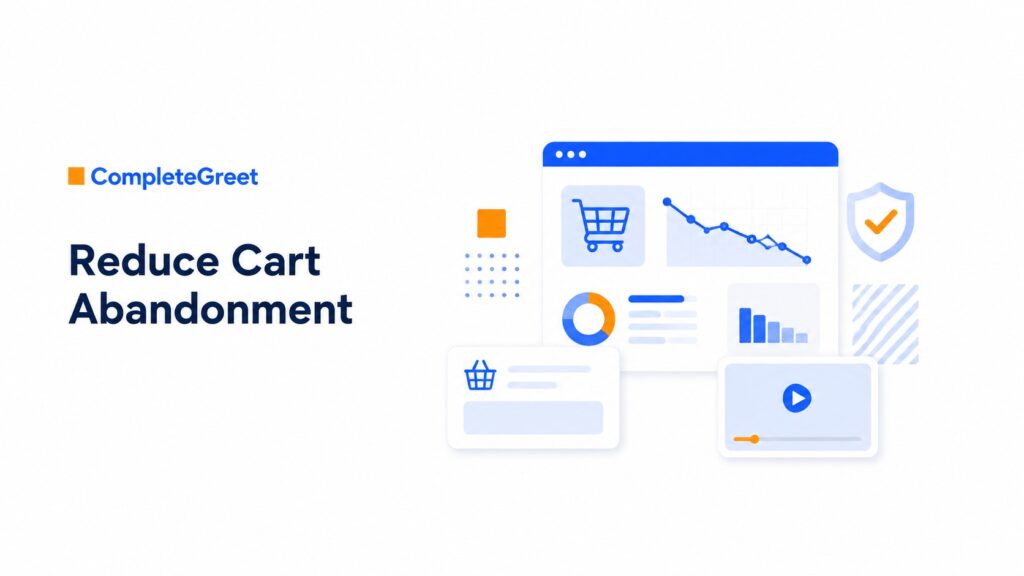
Table of contents
Key takeaways
- Start by finding where shoppers leave and fixing obstacles such as unexpected costs or a difficult checkout. A product video can explain an item or answer a purchase question, but its effect needs testing.
- Video greetings reduce abandonment by addressing the three main reasons shoppers leave: unexpected costs, security doubts, and checkout friction.
- Most stores can have a working video greeting live in under five minutes if they skip the perfectionism and focus on three things: a short script, the right page placement, and a specific call to action.
How to Reduce Cart Abandonment: Practical Guide for Ecommerce
Start by finding where shoppers leave and fixing obstacles such as unexpected costs or a difficult checkout. A product video can explain an item or answer a purchase question, but its effect needs testing.
The available customer examples do not establish a measured checkout-conversion lift. More enquiries or bookings cannot be treated as evidence of fewer abandoned carts.
Why video interrupts the abandonment pattern
Baymard Institute research puts average cart abandonment rates near 70% across all ecommerce sectors. Most shoppers leave because of unexpected costs, forced account creation, or simple distraction. A video greeting does not fix your shipping calculator. What it does is capture attention at the exact moment a visitor hesitates.
Use video to answer a specific question about the product, returns or delivery. Track completed purchases; longer time on site can reflect interest or difficulty and is not proof of lower abandonment.
Most abandonment happens in the first ten seconds of page load.
Placement and scripting tactics that work
Position your video bubble in the bottom right corner of checkout pages, triggered after a 10 second delay. Pop it immediately and you annoy shoppers. Wait too long and they are already gone.
Keep the message under 45 seconds. State your name, mention one specific guarantee or shipping detail, and invite questions. Do not script a sales pitch. Script a response to the exact objection your analytics show kills checkouts most often. If size confusion drives returns, show a quick sizing reference. If shipping costs surprise people, state your free threshold upfront.
One setup quirk worth noting: mobile browsers handle video bubbles differently. iOS Safari sometimes forces full screen playback if the video file exceeds certain compression thresholds. Test your greeting on actual devices, not just Chrome DevTools. A widget that works perfectly on desktop can cover your PayPal button on an iPhone 13.
Most teams skip this and regret it.
What causes cart abandonment and can video reduce it?
Video greetings reduce abandonment by addressing the three main reasons shoppers leave: unexpected costs, security doubts, and checkout friction.
Shipping calculators that appear late in the process cause the biggest drop, off. Baymard Institute research shows extra costs are the top reason shoppers abandon carts. A short video message on the cart page explaining shipping policies upfront cuts this surprise factor. The speaker should state delivery times and any free, shipping thresholds within the first ten seconds.
First-time shoppers may hesitate to enter payment details on an unfamiliar site. Show clear business, payment and return information. A team greeting can support the explanation, but it does not replace those safeguards or guarantee a conversion lift.
Complicated checkout processes drive the third major drop, off.
Forced account creation, multi page forms, and hidden fees all compound the problem. A video widget placed on the checkout page can offer real time assistance. Set the widget to trigger only when the cart contains items, and position it in the bottom right corner so it does not overlay the checkout button on mobile.
Measure checkout completion for visitors eligible to see the video and compare it with an equivalent group. The customer examples do not establish that a greeting causes more completed reservations or purchases.
Video works best when the message matches the abandonment risk. Cart pages need shipping clarity. Checkout pages need reassurance. Product pages benefit from feature explanations. Match the video content to the specific friction point at each stage.
How to set up your first video greeting in under 5 minutes
Most stores can have a working video greeting live in under five minutes if they skip the perfectionism and focus on three things: a short script, the right page placement, and a specific call to action.
Keep the greeting focused on one relevant question and a clear next step. A short first version is a useful starting point, but the available customer examples do not establish a winning duration.
Placement matters more than production quality.
Put the widget on your cart page or checkout flow, not your homepage. The homepage gets traffic that is still browsing. Cart abandoners are high, intent visitors who already decided to buy, then hesitated. That hesitation is where a 15 second greeting from a real person has the highest impact. See ecommerce use cases for placement examples on Shopify, WooCommerce, and custom checkout flows.
Your call to action button text should be specific, not vague. Nielsen Norman Group research found that specific labels outperform vague ones by 55% to 310% in click through rates. Write “Get shipping help” instead of “Contact us.” Write “See return policy” instead of “Learn more.” The button text should tell visitors exactly what happens when they click.
Test your setup on mobile before you test on desktop.
Most teams do this backwards. They polish the desktop view, then discover the widget covers the checkout button on iPhone Safari. Load your cart page on an actual phone, not just Chrome DevTools. The bubble should sit in the bottom right corner without overlapping your payment buttons or zip code field. If it does, adjust the offset in your widget settings before going live.
Track completed purchases per eligible visitor and checkout completion rate. Use enquiry counts and time on site as separate supporting measures. Choose a test duration based on traffic, and account for changes in offers, traffic sources and seasonality.
Start with one video, one placement and one call to action. Test button wording separately if you want to estimate its contribution to completed purchases.
Unexpected costs and unclear terms can interrupt checkout. Identify the actual obstacle on your store; the available customer examples do not establish how video changes completion rates.
The following guidance separates cart abandonment, video interactions and completed purchases. The customer examples do not establish a measured ecommerce uplift.
The formula for measuring video impact on cart recovery follows a simple structure. Calculate the baseline abandonment rate over 30 days prior to widget installation, then compare against the 30 day period after activation while holding traffic sources constant.
Implementation checklists typically prioritize three placement zones. Positioning the widget on cart pages addresses hesitation at the point of exit, while product page placement reduces pre, cart drop, off. Checkout page deployment captures high, intent visitors who pause before entering payment details.
Site speed remains a critical factor in retention. Video widgets that load asynchronously and compress files below 500KB avoid adding measurable latency to page loads. Following Google Web Vitals guidance ensures the added media does not trigger layout shifts or delay interactivity metrics.
Automatic triggers and click-to-open video are different experiences. Compare them on your own site while checking that the video does not block checkout controls; there is no verified uplift range for either approach here.
Merchants seeing the strongest results typically deploy 60 second recordings that load in under 100 milliseconds. CompleteGreet handles the compression and hosting to maintain these speeds without manual optimization.
Common questions
What is the average cart abandonment rate for ecommerce stores?
The average cart abandonment rate sits around 70%, with most studies citing 70.19% to 73.94% globally. Baymard Institute tracked data from 50 studies and found roughly 7 out of 10 shoppers leave without buying. Mobile abandonment runs even higher at about 80%, while desktop sits closer to 70%. These numbers have stayed consistent year over year, making abandonment one of the most predictable losses in ecommerce.
How does a video greeting reduce cart abandonment?
A video can address a purchase question, but it cannot instantly resolve every trust concern. Clear payment, return and delivery information remains essential. Test completed purchases to see whether the video helps.
Where should I place a video widget to reduce cart abandonment?
Place video widgets on cart pages, checkout flows, and pricing pages where purchase anxiety peaks. The cart page catches shoppers comparing total costs, while checkout placement handles trust concerns about payment security. Avoid autoplay on product pages where visitors are still browsing. A greeting that appears after 5 to 10 seconds on the cart page performs best because it does not interrupt early browsing but catches hesitation right before exit.
How long does it take to set up a video greeting on my store?
Most stores get their first video greeting live in under 5 minutes. Record a 30 to 60 second clip on a phone, upload it to CompleteGreet, copy the embed code, and paste it into your site header or use the Shopify app. The widget auto, detects your platform and loads asynchronously so it does not slow page speed. Technical setup is usually faster than writing the actual greeting script.
What should I say in a cart abandonment video?
Answer the three questions that stop purchases: shipping costs, return policy, and payment security. Open with your name and a quick greeting, then mention free shipping thresholds or easy returns, and close by inviting questions. Keep it under 60 seconds. Scripts that sound like a casual conversation outperform polished marketing speak. Record in one take rather than over editing. Authenticity beats production value for trust.
How much does CompleteGreet cost for an ecommerce store?
CompleteGreet starts at $29/month when billed yearly for 5,000 unique visitors with no overage fees. The Growth starts at $59/month when billed yearly for 10,000 visitors, and the Expand starts at $99/month when billed yearly for 30,000. All plans bill by unique visitors, not video plays, so replaying your greeting 50 times costs the same as once. A 30 day free trial with full features lets you test before paying. Annual billing saves 20%.
Which ecommerce platforms support CompleteGreet video widgets?
CompleteGreet works on Shopify, WordPress, Wix, Squarespace, Webflow, WooCommerce, and any custom HTML site. There is a native Shopify app for one click installation, and a simple embed code works everywhere else. The widget also supports React and Vue for headless or custom builds. Async loading keeps page speed scores clean on all platforms.
What results can I expect from adding a video greeting to my checkout page?
The available customer examples do not establish a typical cart-abandonment reduction. Measure checkout completion and completed purchases on your own site, and separate that outcome from enquiries and video engagement.