
 Profile
 Dashboard
 Logout
Table of contents
Key takeaways
- The best video testimonial examples feature a real, named customer telling a specific before and after story in their own words.
- A strong customer story covers the challenge before adoption, the implementation, the outcome, and who should consider the product.
- Get the sound, framing, and identification right before recording.
Why do the best video testimonial examples feel convincing?
The best video testimonial examples feature a real, named customer telling a specific before and after story in their own words.
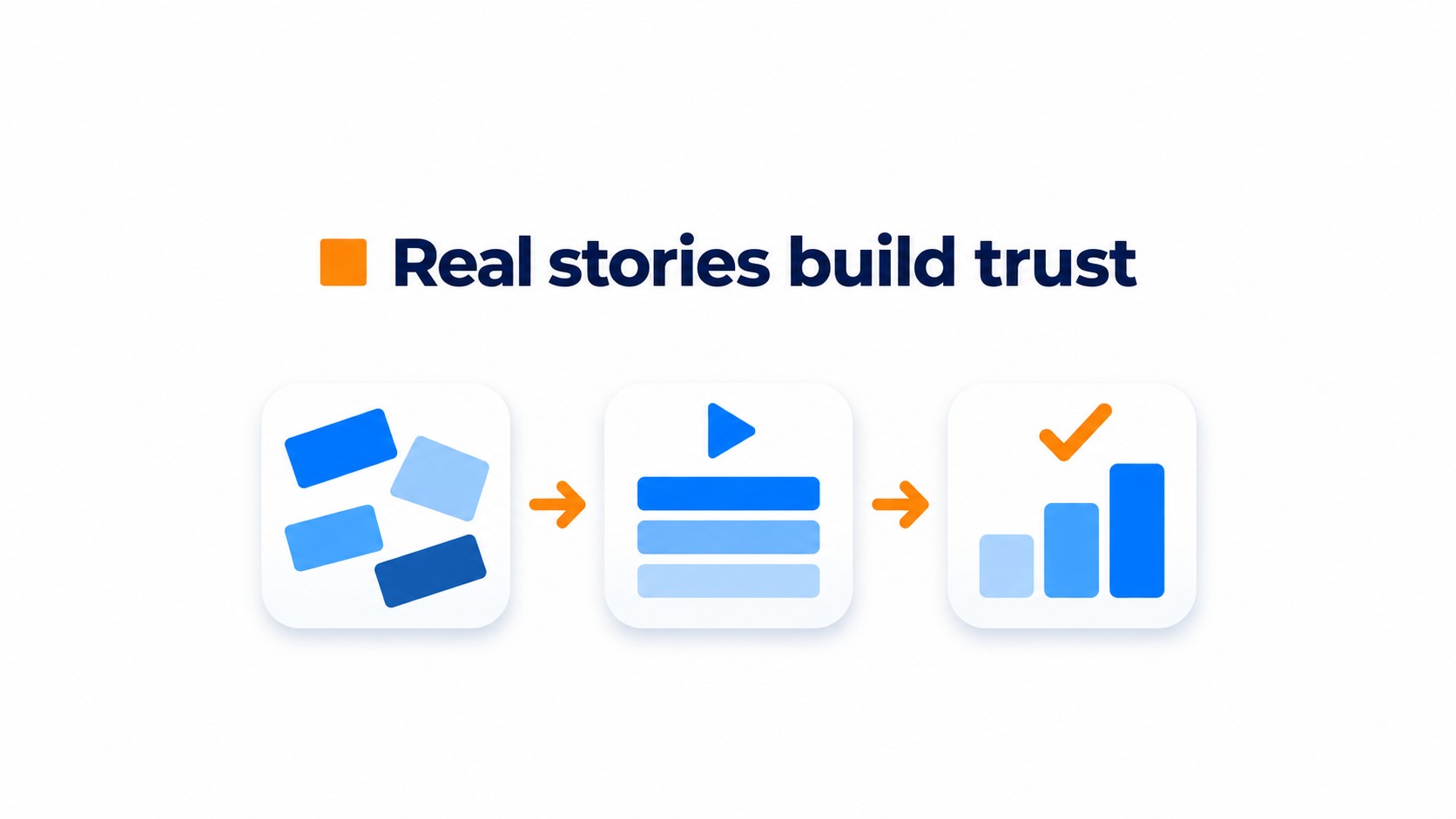
Specific beats polished.
A useful story starts with the problem the customer faced, then explains what changed after using the product. “The process was frustrating” gives viewers little to judge. Naming the delay, extra cost, or missed opportunity makes the problem recognizable and gives the story a detail that sticks.
One concrete result gives the account scale. The customer might describe time saved, revenue gained, or a task that now takes fewer steps, then explain how the result was measured. Broad praise such as “great service” sounds positive, but it doesn’t help a buyer picture what would change in their own work.
Across six live implementations, inquiry volume increased between 43% and 70%, with an average increase of roughly 53%. Those are observed results, not proof that video alone caused the change.See documented customer resultsfor examples with context. If a result needs a narrator to translate it, the interview needs a sharper question.
What should a strong customer story include?
A strong customer story covers the challenge before adoption, the implementation, the outcome, and who should consider the product. Ask what was difficult before, what changed during setup, and who would benefit from the same approach.
Keep the prompts open ended.
“What were you trying to solve?” and “What surprised you during setup?” invite more useful answers than a script asking the customer to praise the product. Keep the questions beside the camera, not in front of the lens. The customer can speak naturally without losing the thread.
Ask for a result with context: what changed, by how much, and over what period. Across six live implementations, inquiry volume increased between 43% and 70%, averaging roughly 53%. A specific measure gives viewers more to assess than general praise; each customer story should use its own verified figure and comparison period.
Finish by asking who should consider the product and why. A candid recommendation helps viewers decide if the story applies to their situation.
How can you make a testimonial easy to watch and trust?
Get the sound, framing, and identification right before recording. Choose a quiet room, place a small microphone close to the speaker, and listen back with headphones before wrapping. Phone speakers can hide hiss. Keep the camera at eye level and leave a little space above the customer’s head. A laptop webcam angled up from a desk can make the person look distracted, so raise the laptop.
Add captions, then check names, product terms, and numbers against the audio. Automatic captions regularly miss brand names. A typo looks careless.
Overlay the customer’s name and company, keeping the text away from the face and from any product detail the viewer needs to see. Keep the frame clean. Relevant product footage should show the actual screen or task under discussion, not generic stock clips that could belong to any company. Use footage only when it clarifies the story.
Aim for 45 to 75 seconds. Videos longer than two minutes may have lower completion rates, though neither length predicts results for every audience. Treat the timing as a guide.
Where should you share customer videos and how do you start?
Start with a customer whose experience answers a question buyers ask just before deciding. Publish the video where that question comes up.
-
Choose someone who can describe a specific problem and what changed. Ask permission to use their name, company, and final recording before booking the interview.
-
Prepare open ended prompts, not a speech to memorize. Ask what was difficult before, what the experience was like, and what result the customer can point to.
-
Record in a quiet room with the camera at eye level. Listen to a short test clip before the interview; a shirt collar can rub against a lapel microphone and spoil otherwise clear audio.
-
Review the edit with the customer for accuracy, then match its placement to the decision. Put product evidence on product pages, send a relevant clip during sales conversations, embed a fuller story in a blog, and cut a short version for social feeds.
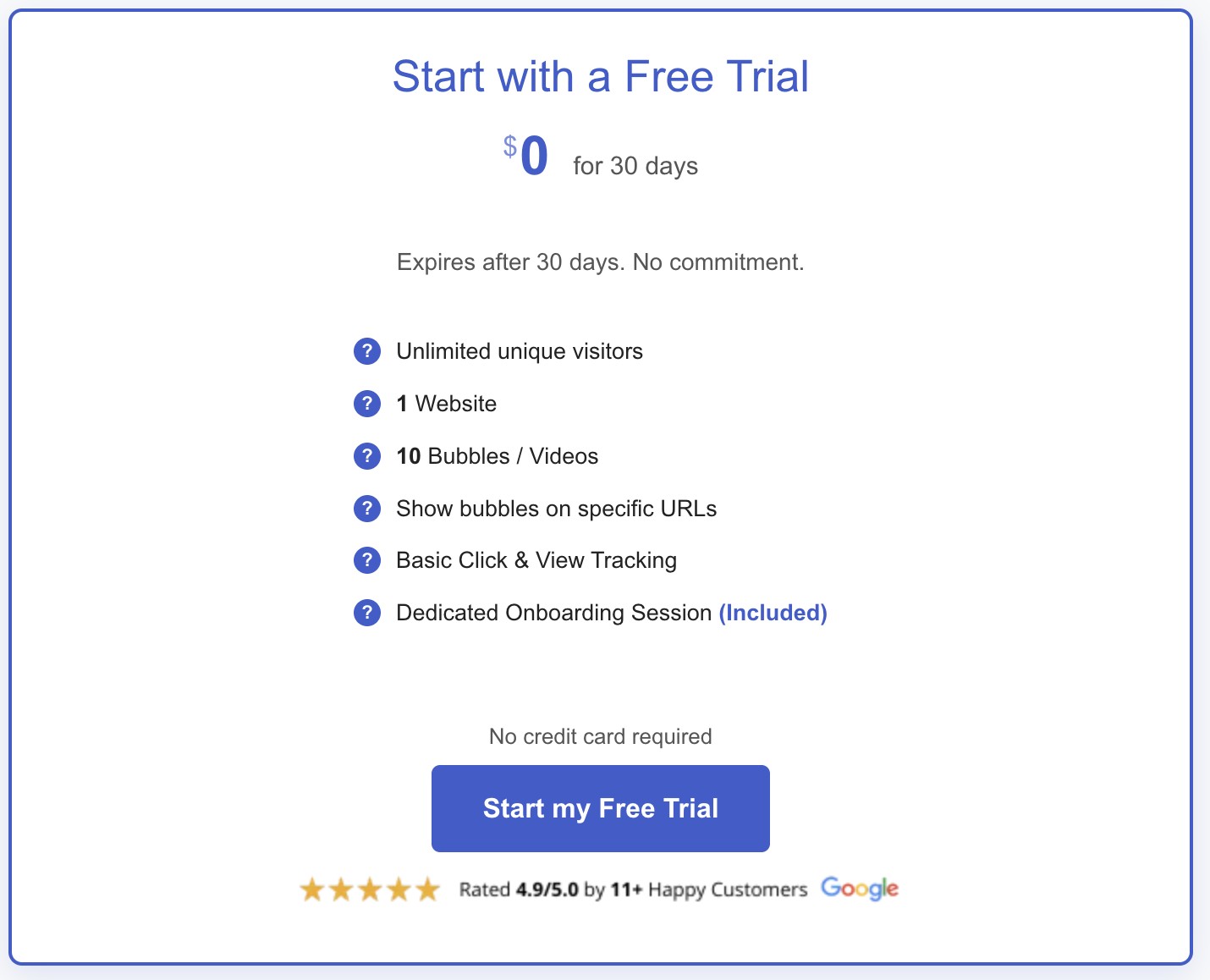
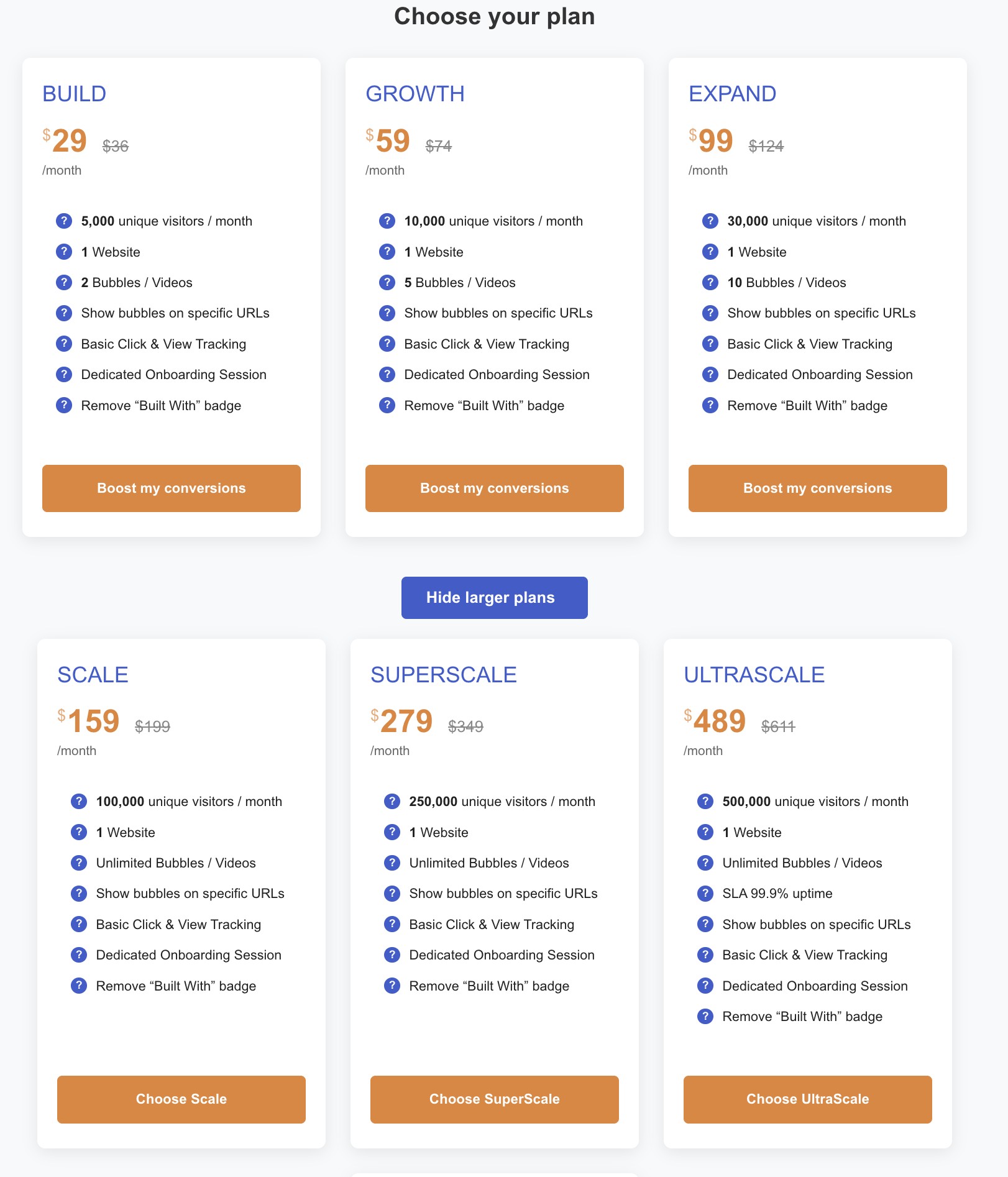
For businesses adding video to their own site, CompleteGreet BUILD supports 5,000 unique visitors per month, 1 website, and 2 bubbles or videos.
Customer video FAQs
A 45 to 75 second cut is a useful target. Keep the context, change, and result; remove repeated setup.
No. Share the topics in advance, then let the customer answer in their own words. A memorized line often sounds like company copy.
Use the full video where buyers weigh the choice, such as a product page or a sales follow up. A blog can hold a longer account.
Not necessarily. Choose a short, clear excerpt that makes sense without the full interview, and add captions for silent viewing.
Aggregate implementation results offer context for evaluating video testimonials, but they don’t establish that a testimonial alone caused a change. The figures below reflect different businesses and outcomes.
Across six live implementations, inquiry volume increased between 43 and 70 percent, averaging about 53 percent, while time on site rose between 19 and 33 percent.
One implementation recorded a 17 percent conversion lift, and one local business reported a 42 percent increase in bookings. These are individual observations, not guaranteed results.
Different outcomes suggest results depend on the business and the measure being tracked. Record a baseline for inquiries, bookings, or conversions before testing a testimonial video, then compare the same measure afterward.
Common questions
How long should a customer testimonial video be to keep people watching?
Aim for about 45 to 75 seconds for a focused customer story. That gives the customer time to describe the problem, what changed, and one useful result without burying the point. Videos longer than two minutes may have lower completion rates, but length alone does not determine whether viewers finish; relevance and clear editing matter too.
Should customers read a script in a video testimonial?
No. Give customers open ended questions instead of a word for word script, so their answers sound natural and specific. Ask what problem they had before, how implementation went, what changed, and who they would recommend the product to. A short outline can keep the recording on track without making the customer sound like they are reading an advertisement.
Where should a business publish customer testimonial videos?
Place each video where buyers are weighing the related decision: product pages for product questions, pricing pages for cost concerns, and sales conversations when a prospect needs proof. Customer or review pages, blog posts, and social feeds can reach people earlier. Match the customer story to the audience and question on that page instead of posting the same clip everywhere.
What makes a video testimonial feel believable instead of staged?
A named customer describing a specific before and after experience feels more credible than general praise. The story should explain the original problem, what changed, and one concrete result, such as time saved or costs reduced. Clear audio, natural language, captions, and a customer name and company overlay help viewers follow the account and understand who is speaking.