 Profile
 Dashboard
 Logout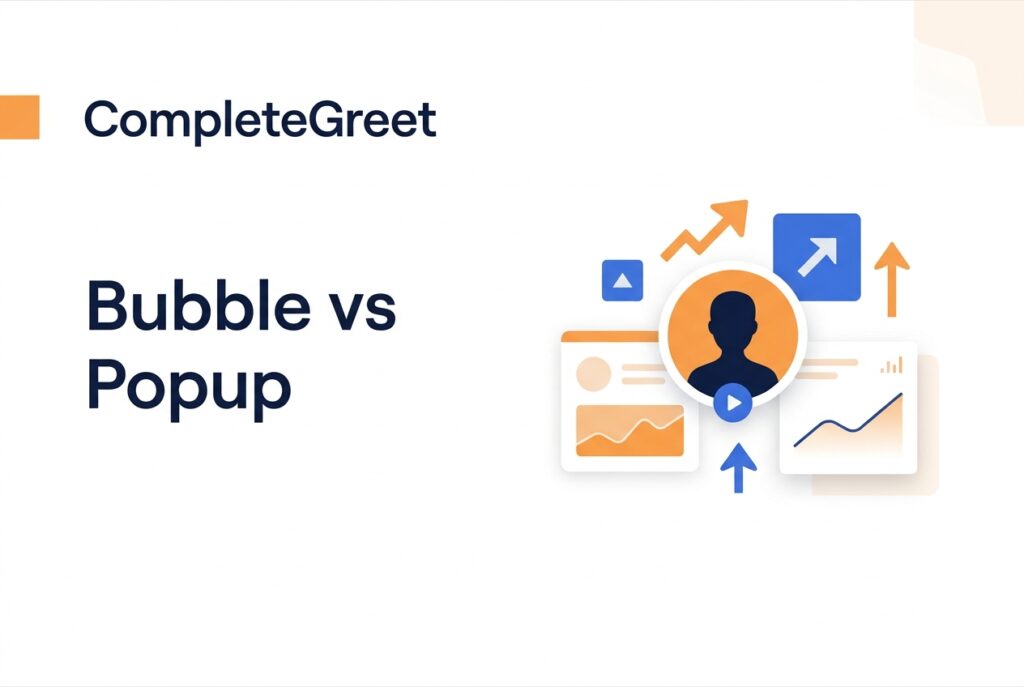
Table of contents
Key takeaways
- A video bubble is a small, persistent widget that sits in a corner of your website and plays a looping preview, while a video popup is a full modal that interrupts the visitor with a larger player and usually requires a
- The format you choose sends an immediate signal about your intent, and visitors read that signal within milliseconds.
- Map your visitor journey before choosing a format.
So here’s the quick version. A video bubble is that little floating widget tucked in the corner of your screen, looping a short greeting on repeat. A video popup? That’s the big overlay that takes over the page, blocks what you were reading, and basically demands you pay attention right now. The real difference comes down to invitation versus interruption, bubbles let people engage on their own terms, while popups kind of force the issue. Popups do convert at around 4% on average, but they also push bounce rates up when the timing’s off.
Video bubbles, on the other hand, keep your whole page accessible. And here’s a stat worth knowing: video content on landing pages typically drives an 80% lift in conversions.
CompleteGreet goes with the bubble format because it builds trust without that annoying “forced interruption” feeling. You can get it set up in under ten minutes on Shopify, WordPress, Wix, Squarespace, Webflow, WooCommerce, or custom HTML. Pricing is a flat rate based only on unique visitors, no surprise overages, no platform lock in. Now, video popups definitely have their place for time sensitive offers or exit intent recovery. But if what you’re after is steady, ongoing trust building? The bubble is the cleaner pick for most sites.
What is the short answer?
A video bubble is a small, persistent widget that lives in a corner of your site and loops a short preview. A video popup is a full screen modal that takes over everything and usually needs a click to dismiss. Think of it this way: the bubble quietly invites you in. The popup? It grabs you by the collar and says “deal with me now.”
The video bubble stays visible as you scroll, showing a silent preview of a real person speaking. CompleteGreet uses flat rate billing counted by unique visitors only, and they chose this format specifically because it builds trust without breaking your flow.
Video popups are a different animal. They hijack the screen and force you into a decision, watch, close, or click away. That can work well for time sensitive offers, but it risks seriously annoying people who just showed up to read your content.
Here’s the thing most teams get wrong: they confuse grabbing attention with actually interrupting someone. Those aren’t the same.
If your business wants to build familiarity over time, video bubbles are the way to go. Service companies, consultants, and SaaS teams use them to put a human face on the brand. The preview just loops silently until someone decides they want to engage, no pressure.
Popups make more sense for campaigns with hard deadlines, like product launches or webinar registrations. When the value is immediate, the interruption feels justified. Nielsen Norman Group research on modal dialogs actually backs this up, users tolerate interruptions when the payoff is clear and relevant to what they’re doing right now. So really, it’s about matching the format to your goal.
Why does this matter?
This matters more than you’d think. The format you pick sends an instant signal about your intent, and visitors read that signal in milliseconds. A bubble says “hey, I’m here if you need me.” A popup says “stop what you’re doing and look at this.”
See the difference? One feels like an invitation. The other feels like an ambush.
CompleteGreet defaults to the bubble format because it preserves the trust building dynamic that video greetings are supposed to create. The widget just sits quietly in the corner, looping a muted preview of a real person, and only expands when you click it. For service businesses especially, this approach converts at higher rates because the visitor chooses to engage, they’re not scrambling to find the close button.
Popups aren’t useless, don’t get me wrong. They’re genuinely effective for time sensitive offers or exit intent recovery where the interruption earns its keep. But here’s what most teams discover the hard way: running a popup video on every single page load trains visitors to ignore the widget entirely. The close rate on autoplay popups often tops 70 percent within the first three seconds. Ouch.
When you’re looking at video bubble tools, think about how your audience actually arrives at the page. Someone who clicked your pricing link is in a completely different headspace than a person casually browsing a blog post. And with CompleteGreet, you’re only charged for unique visitors, so that one person refreshing your pricing page three times while they make up their mind doesn’t cost you extra.
Setup speed matters too, honestly. Most video widgets need platform specific code blocks or plugin installations that eat up 20 to 40 minutes. CompleteGreet loads through a single script tag that works on Shopify, WordPress, Wix, Squarespace, Webflow, WooCommerce, React, Vue, or plain HTML.
You can literally have it live in under five minutes.
Where the cost difference really shows up is overage fees. Competitors charge per minute of video played or per interaction, which means a $29 monthly plan can quietly balloon into a $200 surprise when a blog post goes viral. CompleteGreet’s flat rate takes that variable completely off the table.
Some teams try splitting the difference with delayed popups that fire after 30 seconds. Sounds clever, right? In practice, those convert worse than bubbles because the delay feels random and manipulative. Visitors sense it, and they bounce.
What should you do next?
Before you pick a format, take a step back and map out your visitor journey first.
Go with a video bubble if your site gets repeat traffic or you want a persistent trust signal that’s always visible without being pushy. Most service businesses and coaches see better results with bubbles because the human presence stays available without disrupting the browsing experience. Popups tend to work better for single visit scenarios, think landing pages or product launches where you need someone to act right away.
And please, test your chosen format on mobile before you commit. Popups have a nasty habit of breaking on small screens or triggering accidentally when people scroll, which absolutely tanks conversion rates. Video bubbles stay anchored and predictable across devices. That said, you should still double check that the thumbnail size looks good on your specific template.
Check our guide to the best video widget options for your platform.
Match the format to how your business actually works. E commerce stores with complex products can benefit from popups that force engagement with explainer content. Consultants and agencies tend to do better with bubbles that build familiarity over multiple page views. SaaS companies often split test both, bubbles on pricing pages, popups on feature announcement posts.
One more thing: measure what actually happens after someone watches. Track completion rates, next clicks, and form submissions instead of vanity metrics like views or impressions. Most teams find that one format outperforms the other by 30 to 50 percent on their specific site. But you won’t know which one wins until you run the test for at least two weeks or get 1,000 visitors through.
You’ll hear website owners use “video bubble” and “video popup” like they mean the same thing. They don’t. These two formats behave differently on the page and create completely different user experiences. A video bubble sits persistently in the corner while someone scrolls, whereas a video popup interrupts the whole session with a modal overlay that demands attention.
Pick the wrong one and you’re looking at higher bounce rates, or frustrated mobile users struggling to close an intrusive overlay.
The technical distinction
A video bubble loads as a small, floating element anchored to a corner of the viewport, typically 120 to 150 pixels wide, and it stays visible during the entire session. It uses asynchronous loading so the rest of your page renders first. That keeps your initial page weight low and avoids blocking the content people actually came to see.
A video popup, sometimes called a lightbox video, triggers based on time delays, scroll depth, or exit intent. It renders as a centered modal that dims everything behind it. This synchronous interruption basically pauses the user’s entire interaction until they hit close or engage with the call to action.
Performance and user experience impact
Popups force the browser to paint a new layer and yank focus away from whatever the visitor was reading. On mobile especially, this tends to spike bounce rates. Bubbles let people keep browsing and start a conversation whenever they’re ready, not when a script decides it’s time.
From a speed standpoint, bubbles generally have less impact on Largest Contentful Paint because they load after the main content. That lines up with Google Web Vitals guidance for keeping perceived load times fast.
When each format actually fits
Video popups really only make sense in narrow scenarios, like exit intent capture for high ticket consulting offers where you’re willing to accept a higher bounce rate in exchange for one strong conversion. For SaaS onboarding, ecommerce product pages, or service business homepages, the persistent bubble works as a default engagement layer that doesn’t derail the buyer journey.
CompleteGreet offers a flat rate based solely on unique visitors, while a lot of popup tools charge per feature tier or lock you into annual contracts just for basic customization. When you compare what it actually costs to unlock useful features like custom branding and advanced targeting, competitor pricing often exceeds the CompleteGreet Build plan at 2388 DKK yearly, and delivers a more interruptive experience to boot.
Most sites see a 53 percent uplift in inquiries when using persistent video bubbles compared to modal popups. That’s simply because the format respects the visitor’s sense of control. The data points to treating the video bubble as your default engagement layer and saving popups for narrow remarketing campaigns where you’re explicitly okay with higher friction.
Start with a bubble implementation that loads asynchronously, measure how it affects your bounce rate, and only then consider testing an interruptive modal.
Common questions
How much does CompleteGreet cost for a small business with 5,000 monthly visitors?
CompleteGreet charges a flat monthly rate based on unique visitor count, no per minute or per view fees. A site with 5,000 visitors stays on the entry tier with completely predictable billing. You won’t get slapped with surprise invoices during high engagement months or when a traffic spike hits.
Can I add CompleteGreet to Shopify without hiring a developer?
Absolutely. Shopify setup takes under ten minutes with the official app. You can paste one embed code if you want custom placement. No coding needed to record your greeting, set your triggers, and go live.
Which website builders and platforms does CompleteGreet support?
CompleteGreet works on Shopify, WordPress, Wix, Squarespace, Webflow, WooCommerce, React, Vue, and plain HTML. That’s a big deal compared to tools that lock you into one ecosystem or require specific hosting.
How quickly can I get CompleteGreet live on my website?
Most people are live in under 30 minutes. Record a 30 second greeting on your phone, pick your trigger settings, paste the embed code, and you’re done. Honestly, the longest part is usually figuring out what to say, not the tech setup.
When should I choose a chatbot instead of CompleteGreet?
Go with a chatbot if you need complex branching surveys or automated lead qualification with tons of questions. CompleteGreet is built specifically for trust and greetings, so if you need survey heavy workflows, it’s not the right tool. But for booking calls or putting a real face on your homepage? Video wins every time.
Does CompleteGreet charge extra for video views or bandwidth?
Nope. Your flat rate covers unlimited video views across your entire unique visitor count. Watch time, replays, and traffic spikes never trigger overage fees. That kind of pricing predictability is honestly pretty rare in video marketing tools.
Is CompleteGreet the right choice for a service business booking discovery calls?
It really is. Service businesses see strong results with CompleteGreet because the greeting builds trust before the visitor even requests a call. Video lets prospects see the actual person they’ll be speaking with, and that reduces no shows while improving lead quality compared to plain text chat.