 Profile
 Dashboard
 Logout
Table of contents
Key takeaways
- B2B services websites struggle with trust because they are asking visitors to buy something invisible.
- A video widget loads a small floating bubble in the corner of a website.
- The highest impact placements are your homepage, about page, service detail pages, and pricing page.
Why do B2B services websites struggle with trust?
Here’s the thing about selling B2B services online: you’re asking someone to buy something they can’t see or touch. If you’re selling a physical product, the buyer can check specs, look at photos, read dimensions. But consulting? Legal work? Agency services? You’re essentially selling a promise stapled to a proposal. And that gap between what you claim and what a prospect can actually verify? It breeds skepticism fast.
It doesn’t help that everyone sounds the same. Every marketing agency says they “drive ROI.” Every consultant promises “transformation.” Every SaaS partner calls themselves “strategic.” You’ve heard it all before, right? So have your prospects.
They genuinely can’t tell who delivers and who’s just good at writing copy.
And the stakes? Way higher than a bad product purchase. Picking the wrong service provider doesn’t just cost money, it costs time, internal credibility, and sometimes people’s jobs.
So before a decision maker fills out your contact form or books a call, they need real assurance. They’re looking for proof that an actual person with genuine expertise is behind that polished website.
Most B2B service sites completely fail this test, though. They lean on stock photography, vague “meet the team” pages, and contact forms that feel like tossing a message into a void. Nielsen Norman Group research on web credibility confirms what we probably already know, visitors judge trustworthiness in seconds based on how authentic a site feels. When everything looks templated and anonymous, people’s guard goes up immediately.
That’s exactly why teams that intentionally work to make website trustworthy end up converting better. It’s a pattern you see over and over in professional services. The firms that show real faces and speak directly to what visitors are worried about consistently outperform those hiding behind generic copy.
The fix isn’t complicated: show people who actually does the work.
How do video widgets work for B2B services?
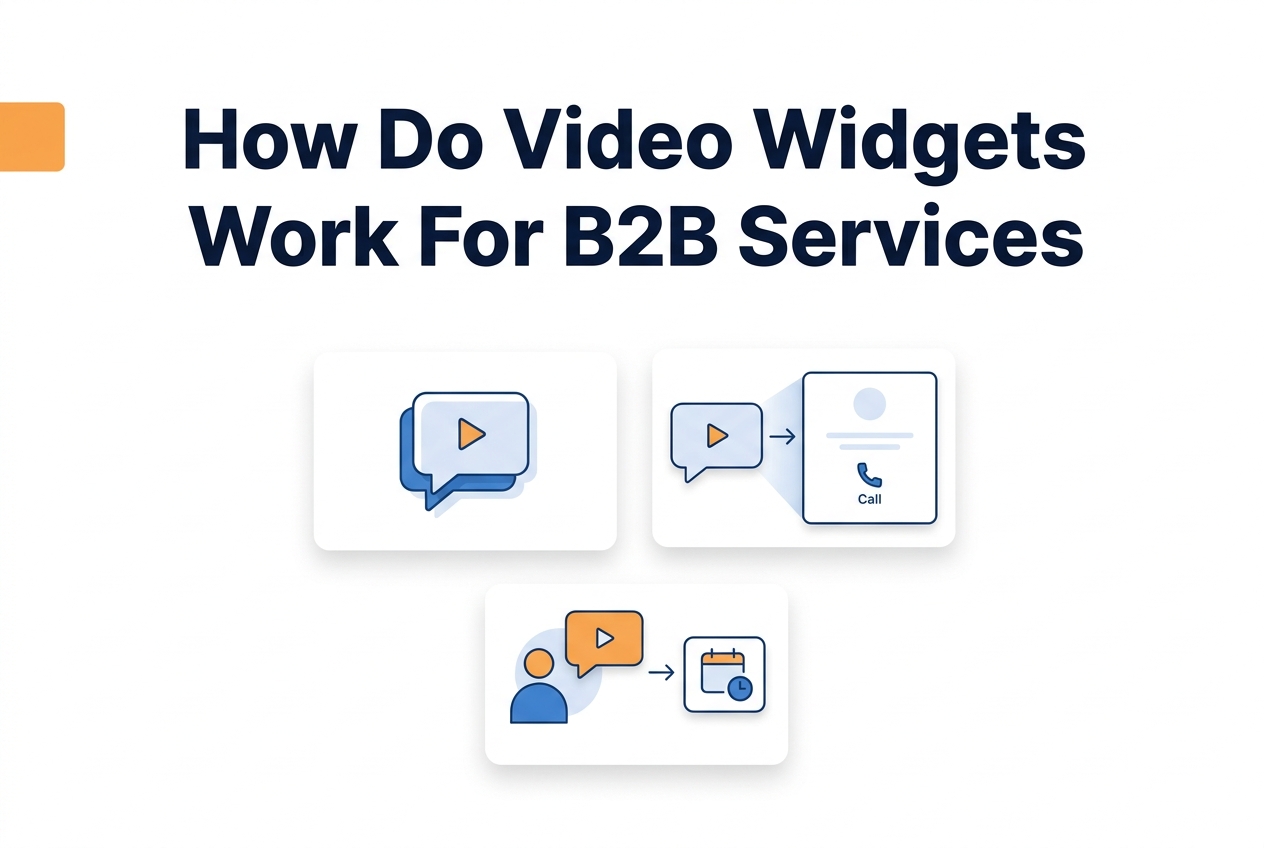
A video widget is pretty straightforward. It loads a small floating bubble, usually in the corner of your site. A visitor clicks it, and it expands into a short recorded greeting from a real person on your team.
Now, B2B services aren’t like e commerce shops where someone adds to cart and checks out in five minutes. Your prospects are spending weeks evaluating options before they even think about reaching out. A video greeting breaks through the wall of static text and stock imagery that most service sites rely on. It’s proof there’s a real human behind the brand.
Where does the bubble work best? On pages where visitors are actively making decisions, service descriptions, pricing, case study sections. It won’t replace your contact form. Think of it more like the nudge that gets someone to finally use it.
If you keep the message around 30 seconds using a solid video bubble script, it won’t come across like a sales pitch. That brevity matters.
For CTAs, the ones that work best in B2B are direct booking links and content downloads. A calendar button kills the email back and forth of trying to schedule a call. A gated whitepaper or template gives value upfront, before you ask for a conversation.
I know some B2B teams worry video feels too casual for their industry. Honestly, the opposite tends to be true. A well lit, straightforward greeting on a technical service page signals confidence and transparency in a way that even the most polished marketing copy just can’t match.
And placement really does matter more than you’d expect. A video bubble on your homepage introduces the brand. That same bubble on a pricing page quietly addresses concerns about hidden fees or contract terms. On a case study page, it invites the visitor to ask about their own situation. Same tool, different job depending on where it sits.
One more thing worth mentioning, the thumbnail is what people see before they click. A genuine smile and direct eye contact beats animated graphics every single time. Most B2B service sites get noticeably higher click through rates when the thumbnail shows the speaker looking straight at the camera, not staring at a screen or reading off notes.
Video Widget Impact for B2B Services
How personal video greetings solve trust and engagement challenges in professional services
Real Case Result
+44%
Increase in inquiries
+28%
Time on site increase
Find din ppo.dk, Danish B2B information platform
Key B2B Trust Challenges Solved:
-
Humanize complex service offerings with a personal face to face introduction
-
Reduce hesitation on high consideration purchase decisions
-
Build credibility before the first sales conversation
-
Differentiate from competitors using static contact forms
Source: Find din ppo.dk platform case data
See the static HTML data above for the full breakdown.
Where should you place video on a B2B services website?
Your best bets are the homepage, about page, service detail pages, and pricing page. Each one serves a different trust building purpose, and if you skip any of them, you’re leaving a gap in your visitor’s decision making journey.
For your homepage, get that video within the first screen, bottom right usually works well. You want to catch visitors before they bounce and answer the question running through their head: “Who am I actually dealing with here?” Keep it under 30 seconds and focus on the problem you solve, not your company’s founding story.
The about page (or team page) is where skepticism tends to peak. People land there specifically to check if you’re real humans or just another faceless agency. A video greeting from your founder or lead consultant works so much better than staged team photos because it shows mannerisms, how someone speaks, their energy, things a headshot just can’t convey. It’s also a natural spot to mention your experience without it feeling braggy.
On service detail pages, a video that walks through a typical engagement is gold. Cover what happens in week one, what deliverables actually look like, and how you’ll communicate throughout the project. This directly tackles the “what am I really paying for?” anxiety that kills so many B2B conversions.
Your contact or booking page? That’s where hesitation hits hardest.
And then there’s the pricing page, probably where most B2B services lose their best leads. A video that acknowledges the investment and walks through the ROI calculation can build trust on website right when sticker shock kicks in. Don’t dance around the price. Being evasive about it only makes you look shady.
One detail that gets overlooked constantly: your video thumbnail should show a human face looking at the camera. Not a screenshot of your office. Not a logo. Faces get clicks. Everything else doesn’t.
What results have similar businesses measured?
B2B service sites that add video greetings tend to see measurable bumps in both engagement and conversions within the first month. It doesn’t take long.
Find din ppo.dk, a Danish information platform, saw a 44% increase in inquiries and a 28% jump in time on site after putting a video greeting on their homepage. And these aren’t freak numbers. Other service businesses running similar setups report comparable results, especially when the greeting is specific and the CTA is clear.
Time on site is a metric that honestly matters more for B2B than most people realize.
Longer sessions tend to mean higher trust and better lead quality. When someone watches even a 30 second video greeting, they stay on your site longer by default. And that extra time gives your value proposition more room to actually land with the visitor.
But let’s talk about the number that really matters: that 44% inquiry lift. More inquiries from the same traffic means your customer acquisition costs drop and your pipeline grows. Teams that script their greeting around one clear next step consistently outperform those using vague, generic welcomes. If you take the time to craft a 30 second video greeting with a focused CTA, it turns a polite hello into an actual conversion tool.
Your mileage will vary depending on industry and traffic quality, of course. A site pulling 10,000 monthly visitors will see different raw numbers than one with 500. But the pattern holds across both.
One thing that separates the top performers from everyone else: they refresh their video every quarter. Stale greetings lose their punch over time. Plan to re record when your offer changes, when a new season rolls around, or when you notice click rates starting to slide.
B2B service buyers often hesitate when they can’t see who they’ll actually be working with. That anonymity on standard service websites creates a trust gap that walls of text and stock images just won’t bridge.
Below you’ll find specific placement strategies and measured outcomes from similar implementations.
The Trust Challenge for Service Businesses
Unlike product companies, B2B services are selling intangible outcomes and ongoing relationships. Buyers can’t evaluate quality through specs alone, so they naturally look for signals about your team’s credibility and approachability.
Where to Place Video Widgets
Homepage implementations capture attention during that initial evaluation window and help reduce early exits. On service specific pages, explainer videos can clarify complex offerings before the visitor decides to leave.
Contact and pricing pages tend to see the strongest conversion lifts because visitors at this stage are looking for that final bit of reassurance before they commit to a conversation.
Measured Results from the Field
Find din ppo.dk recorded a 44% increase in inquiries and a 28% increase in time on site after adding a personal video greeting to their platform. Industry benchmarks suggest similar businesses typically see inquiry uplifts around 53% when video widgets show up on high intent pages.
Bounce rates often drop by 25% or more when the video loads within the first few seconds of a page visit. Keeping your load times fast aligns with Google Web Vitals guidance and helps preserve those engagement gains.
That 44 to 53% inquiry uplift range tells us video widgets act as genuinely effective trust signals for service businesses. Placing them on pricing and contact pages captures visitors right at the moment of decision, rather than distracting early stage browsers.
Implementation costs are typically fixed regardless of traffic volume, which means your ROI scales naturally as visitor counts grow.
Common questions
How much does CompleteGreet cost per month and what counts toward the visitor limit?
CompleteGreet charges a flat monthly rate based on unique visitors only, not video plays or minutes watched. You pay for the number of distinct people who land on your site, no matter how many times they watch your greeting. So if traffic spikes or one visitor replays your video ten times, your bill stays the same. No surprise overage fees, even during your busiest sales periods.
Can I add CompleteGreet to my Shopify store without hiring a developer?
Absolutely. You can install CompleteGreet on Shopify in under ten minutes without touching a single line of code. It connects through Shopify’s standard integration, and you upload your video greeting through the dashboard. Most store owners have their first greeting live the same day they sign up. No theme edits, no JavaScript snippets to paste, no developer budget needed.
Does CompleteGreet work on WordPress, Wix, Squarespace, and custom websites?
It does, CompleteGreet runs on all the major platforms including WordPress, Wix, Squarespace, Webflow, WooCommerce, and any custom HTML site. You’ll get a simple embed code for your header, or you can use the native plugin where it’s available. And here’s a nice bonus: if you ever switch platforms, your greeting moves with you. No rebuilding your workflow from scratch.
What kind of business gets the most value from CompleteGreet video greetings?
Service businesses, coaches, consultants, and stores selling high consideration products tend to see the strongest results. These are the businesses that need to build trust quickly before a visitor bounces. A thirty second video of the founder walking through their process honestly beats a wall of text when it comes to converting skeptical browsers. E commerce sites with complex products also find it useful for reducing support tickets and pre answering the most common questions.
Is CompleteGreet good for collecting survey responses and detailed customer feedback?
Not really, CompleteGreet is built for trust building and greetings, not surveys. The tool focuses on human connection and making strong first impressions, not collecting data. You can add a simple call to action button, but you won’t get branching logic, multi step forms, or detailed analytics on survey completion rates. If feedback collection is your main goal, you’ll want a dedicated survey tool for that.
How long does it take to see results after adding CompleteGreet to my website?
Most businesses start noticing engagement changes within the first two weeks. You’ll see shifts in time on page, click through rates on your greeting buttons, and direct replies from visitors. Conversion lift takes a bit longer to confirm, typically thirty to sixty days depending on how long your sales cycle runs. Setup is quick, but give it a full month before you judge how it’s performing.